
 Face
FaceDark Spots and Uneven Tone: What Facials Can Do
Which marks may soften with regular exfoliation and LED sessions, which need a dermatologist first, and the one habit that matters more than any facial.
Read the guide
Face · 6 min read
RF warmth, red and infrared LED, and cooling compared for fine lines, why many clients rotate, and what facials cannot do for deep wrinkles or lost volume.
Anti-Aging Facial · From $250 · 60 min
For fine lines, there is no single best facial. Each of our 60-minute facials approaches the look of fine lines from a different direction. The RF Face & Neck Facial uses radio-frequency warmth, which may temporarily make skin look a little smoother and more taut. The LED Skin Tightening Facial uses red and infrared light, which many clients find leaves skin looking a little plumper and fresher over a series. The Cryotherapy Facial uses an applicator chilled to −6 °C, which may temporarily reduce the look of puffiness and leave the surface looking more even. Results vary from person to person.
If we had to pick a starting point for fine lines alone, we would usually suggest the LED facial or the RF facial, then decide after seeing your skin. Many clients rotate between the two. The cryotherapy facial is more often a finishing touch or a pre-event choice than a long-term plan for lines. We explain why below.
A fine line is a shallow crease in the surface of the skin. Early lines around the eyes, mouth and forehead often come from repeated expression, dryness and the gradual changes that happen to skin over time. They tend to look more noticeable when skin is dehydrated or dull, and less noticeable when skin is hydrated, plump and evenly toned.
That distinction matters, because it tells you what a facial can and cannot work with. A facial can influence how hydrated the surface looks, how smooth the outer layer appears, and how the skin reflects light. It cannot change bone structure, rebuild lost volume or stop the muscles that create expression lines. Keep that in mind as you read the comparison. Everything below is about the look of fine lines, not about changing the structure of the skin.
Radio-frequency energy is used to warm the skin gently and evenly. In a cosmetic facial, that warmth is kept at a comfortable level and moved continuously over the face and neck. Many clients notice their skin looks slightly firmer and smoother right after a session, and that fine lines around the mouth and cheeks look a little softer. The effect is temporary and tends to build with repeat visits. The 60-minute RF Face & Neck Facial is $250 and finishes with a 24K gold and black caviar mask, which many clients find leaves skin feeling comfortable and looking hydrated.
RF tends to be the facial we suggest when fine lines sit on skin that also looks a little lax, especially along the jawline and neck. It is not a fit for everyone. If you have a pacemaker or another implanted device, or if you have had recent surgery on the face, talk to your physician first. For a full description, see our non-surgical face lift page.
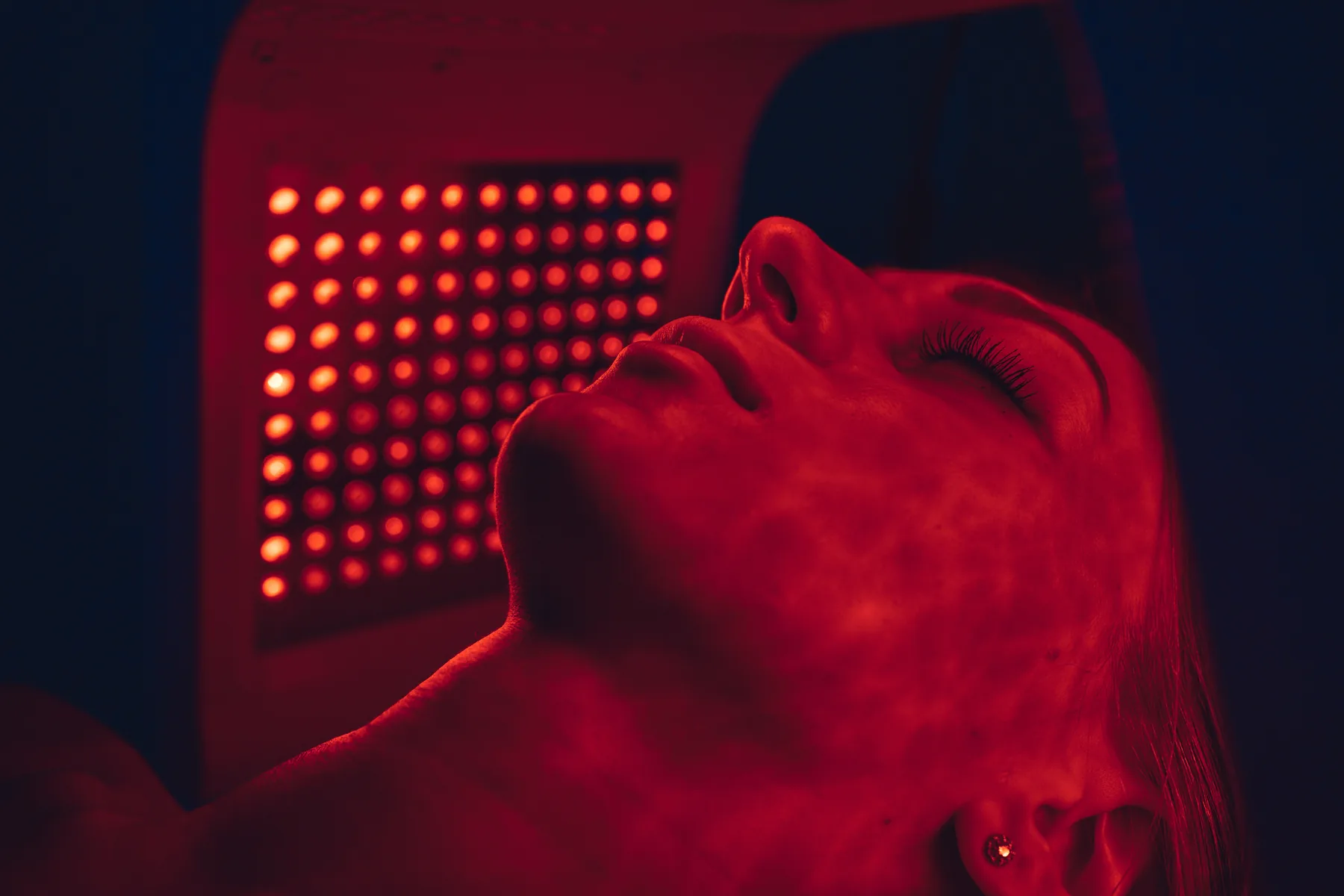
Our LED facial uses two devices. The Perfectio X delivers red and infrared light, and the Sapphire X delivers blue light at 415 nm. Both are FDA-cleared Class II devices. That clearance covers the device itself, not any particular result. For fine lines, the red and infrared wavelengths are the ones that matter. Red light is generally described as being absorbed near the surface, while infrared light is described as reaching a little deeper. Neither is designed to produce noticeable heat, and many clients describe the session as relaxing.
Many clients notice that skin looks a little plumper and more even after a series of LED sessions, and that fine lines look softer as a result. The change is gradual, which is why we talk about a series rather than a single visit. A typical starting point is four to six sessions spaced one to two weeks apart, then maintenance every three to five weeks. The 60-minute LED Skin Tightening Facial is $250. LED is often the facial we suggest first for fine lines on skin that is otherwise in good shape, because it is gentle, comfortable and easy to repeat.
The Cryotherapy Facial uses an applicator chilled to −6 °C, passed over the face in brief, controlled strokes. The skin itself is never brought anywhere near that temperature. The cooling is meant to temporarily reduce the look of puffiness and redness and to leave the surface looking tighter and more refreshed for a short time. The 60-minute Cryotherapy Facial is $325.
For fine lines specifically, cooling is the least direct of the three. When skin looks less puffy and more even, fine lines can look softer by comparison, and some clients like the immediate, fresh look before an event. But the effect is short-lived, and cooling does not address the hydration and surface smoothness that most influence how lines appear day to day. We would not usually build a fine-line plan around the cryotherapy facial alone. If you have cold urticaria or another cold sensitivity, this is not the facial for you, and a physician should weigh in. See our cryotherapy facial page for details.
Because each facial works on a different aspect of how lines look, many clients alternate rather than committing to one. A common pattern is LED for the gradual, cumulative look, RF when the skin feels a little slack, and a cryotherapy facial before an occasion. Others simply go with what their skin seems to want that month. Our skincare specialists can suggest a rhythm after seeing your skin, and the plan can change over time.
Rotating also fits the honest reality that any single facial has limits. No cosmetic facial changes the structure of the skin, so the look from each session fades. Spacing different approaches across the month may help the overall look stay more consistent without leaning on one method. If you want to try more than one, our facial packages pair LED facials with daily products, and every option is listed on our pricing page.
Facials cannot fill deep wrinkles. A crease that is clearly visible when your face is completely at rest is beyond what warmth, light or cooling can change in appearance for more than a short time. Facials also cannot restore lost volume in the cheeks or under the eyes, lift heavy skin, or stop the expression lines that come from a lifetime of smiling. We would rather say that plainly than oversell.
What facials may do is make early, shallow lines look softer and the skin around them look smoother and more hydrated. That is a real and worthwhile goal for many people. It is simply a different goal from what a physician or dermatologist offers, and if deep wrinkles or volume loss are your main concern, a consultation with a physician is the right first step. Our facials are cosmetic services, not medical care. If you are pregnant, have a pacemaker, have cold urticaria, have an active skin infection, or have had recent surgery, talk to your physician before booking.
If you are not sure where to start, book the facial that matches your skin today. Skin that looks dry and a little tired often does well with LED. Skin that looks slack along the jaw often does well with RF. Skin that looks puffy before an event often does well with cooling. At our Hulen Mall spa in Fort Worth, your first visit begins with a short conversation about your skin, and our specialists will tell you honestly if another option seems a better fit, or if a facial will not help with what you describe.
Arrive with clean skin if you can, and allow a few extra minutes to find us inside the mall. Parking is free. If you use a prescription retinoid, ask your dermatologist whether to pause it for a few nights before your visit. Afterward, keep skin hydrated and protected from sun, and give a series a fair chance before judging the result.
Neither is better for everyone. LED is gentle and builds gradually over a series, while RF may leave skin looking a little firmer right away. Many clients rotate between the two. Results vary from person to person.
A typical starting point is four to six sessions spaced one to two weeks apart, followed by maintenance every three to five weeks. Many clients notice a change around the third or fourth session, though timing varies.
No. A facial may temporarily soften the look of fine, shallow lines. Deep wrinkles and volume loss are beyond what a cosmetic facial can change, and a physician is the right first step for those concerns.
Treatments at Vearitea Wellness Spa are cosmetic and wellness services, not medical care, and are not intended to diagnose, treat, cure or prevent any disease. Results vary from person to person. If you are pregnant, have a pacemaker, cold urticaria, an active skin infection, or have had recent surgery, talk to your physician before booking.
If you would like to find out which facial may suit your fine lines, you are welcome to book a session and we will talk through the options when you arrive.
Keep reading
FaceWhich marks may soften with regular exfoliation and LED sessions, which need a dermatologist first, and the one habit that matters more than any facial.
Read the guide
FaceOur anti-aging facials at Hulen Mall are $250 for RF or LED and $325 for cryotherapy. What each hour includes, how a rotated series is priced, how to compare.
Read the guide
 Face
FacePuffiness is mostly fluid. Dark circles are mostly pigment, thin skin or shadow. What cooling and EMS micro-massage may change, and what they cannot.
Read the guide