
 Face
FaceDoes LED Light Therapy Work? Red vs Blue Light Explained
A calm look at red, near-infrared and blue LED light, what each is commonly used for, and what to expect from a 60-minute LED facial at Vearitea.
Read the guide
Face · 6 min read
A calm comparison of at-home LED masks and wands against the in-spa LED facial, and how many of our clients use both without overthinking it.
LED Facial · $250 · 60 min
An at-home LED mask and an in-spa LED facial are not rivals. They do related things at different strengths and on different schedules. The mask gives you small, frequent doses on your own time. The in-spa facial gives you a stronger, more complete session with professional preparation, a few times a season. Many of our clients use both, and that is usually the combination we suggest.
If you are deciding where to start, think about what you want. If you want the best chance of a visible change in how your skin looks before an event or at the start of a routine, the in-spa facial is the stronger single step. For keeping that look going between visits, a good at-home device is the practical choice. Results vary with skin type, age and how consistently either one is used.
Light therapy depends on dose. Dose is the intensity of the light multiplied by the time the skin is exposed to it. Professional handheld devices are built to deliver a higher intensity than consumer masks, so the light phase, the longest part of our 60-minute session, can deliver more light than most consumer devices manage in the same time. At-home masks are intentionally gentler. They are designed for frequent, unsupervised use in front of a bathroom mirror, which is a sensible trade-off.
Our in-spa LED facial uses two handheld devices. The Perfectio X delivers red and infrared light. The Sapphire X delivers blue light at 415 nm. Both are FDA-cleared Class II devices, and that clearance covers the device itself, not any particular result. You can read how the session is structured on our LED facial page.
A stronger dose does not mean a better dose. Light therapy tends to follow a window. Too little may do little, and more past a certain point does not keep adding benefit. The professional advantage is less about raw strength and more about reaching an effective dose reliably in one sitting, with a specialist controlling the contact, the angle and the time spent on each area.
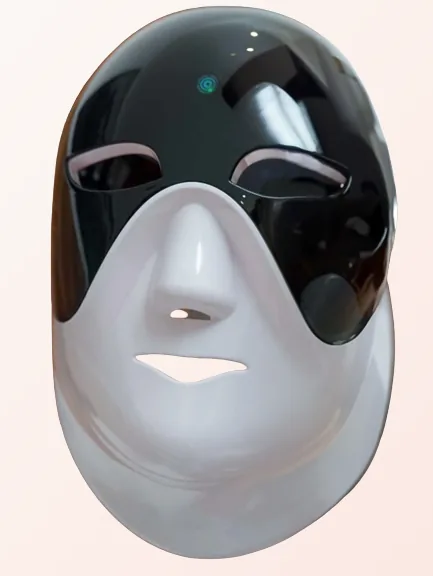
A mask fits a face approximately. The cheekbones, the sides of the nose, the jawline and the area under the brows often sit farther from the LEDs than the forehead does, and light intensity falls off quickly with distance. Wands solve the fit problem by letting you move the light where you want it, but they cover a small patch at a time, so a full-face pass takes patience and the dose is uneven unless you are disciplined.
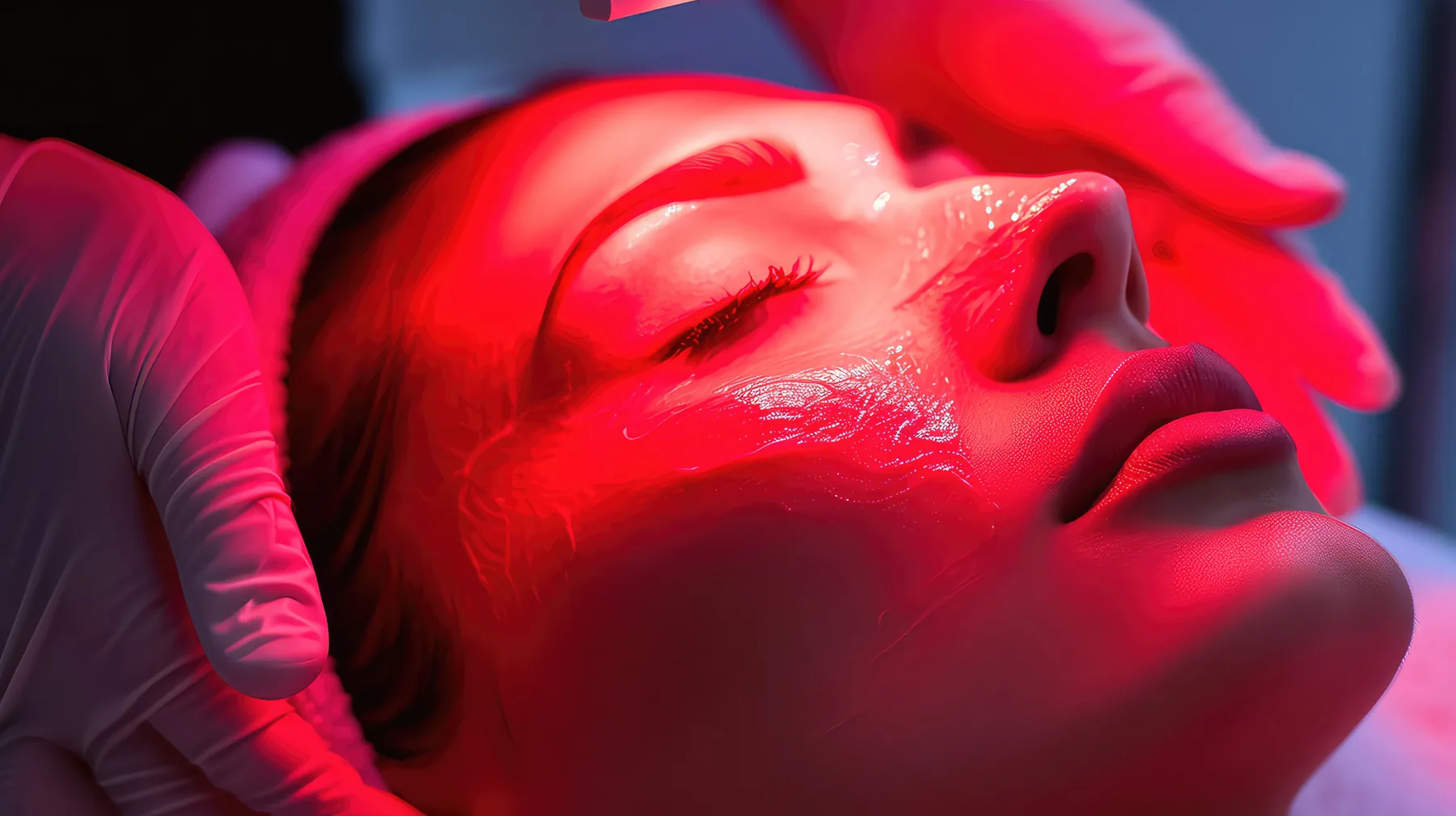
In the spa, our specialist works the handheld Perfectio X and Sapphire X across the face and neck in slow, overlapping passes, one area at a time, keeping the contact, the angle and the time per area consistent. Every zone gets a controlled dose, including the sides of the nose and the jawline that a mask sits away from. The neck matters more than people expect. It is where many clients first notice the look of crepey texture, and a mask usually leaves it out. If the neck is part of your concern, that alone may tilt the decision toward the in-spa session.
The honest strength of an at-home device is frequency. Light therapy is cumulative. The research that exists tends to involve regular sessions over weeks, not a single strong exposure. A mask used three to five evenings a week delivers a steady rhythm that spa visits alone cannot provide, and it costs nothing after the purchase.
Consistency also has a failure mode. Many at-home devices end up in a drawer within a few months. If you tend to start strong and fade, a standing in-spa appointment every few weeks may give you a more reliable total dose over a year than a mask that goes unused. There is no wrong answer here, only an honest one.
This is the part of the comparison that gets overlooked. Light has to reach the skin to do anything. At home, most people put the mask on over whatever is left after a quick wash. Makeup residue, sunscreen, oil and a layer of dead surface cells all sit between the LEDs and the living skin beneath.
Our 60-minute LED facial begins with a cleanse and a gentle exfoliation suited to your skin that day. That preparation removes the barrier so the light phase works on clean, receptive skin. It finishes with a serum chosen for how your skin looks that day, and we will remind you to wear sunscreen the next day and most days after. The light is the headline, but the preparation and the serum around it are a large part of why the in-spa session tends to produce a more noticeable look than the same minutes under a mask.
There is also the simple fact of having a trained person look at your skin. We can see whether blue, red or a combination suits you that day, notice areas that are dry or irritated and adjust, and tell you if something looks like a question for a dermatologist rather than for us. A mask cannot do that.
The pattern we see most often is simple. A series of in-spa LED facials sets the baseline. Four to six sessions, spaced one to two weeks apart, is a typical starting point. Between and after those visits, the client uses an at-home mask or wand several evenings a week on cleansed skin to keep the momentum. Then the spa visits stretch out to a maintenance rhythm, often monthly or seasonal, while the home device carries the routine.
Our facial packages pair a series of LED facials with daily products to use at home, which is the same idea in one purchase. A single LED facial is $250 for 60 minutes.
A few practical notes. Skip the mask on the day of your spa visit, since the session already delivers a full dose. Use the mask on clean, product-free skin, then apply serum and moisturizer afterward. If your skin ever feels warm or tight, or looks pink for more than an hour after a home session, reduce the frequency.
We carry Elevare and Nova devices in the spa, and we can show you how they work on your own face before you buy. Beyond brand, a few questions matter more than the marketing. Which wavelengths does it use, and do they match what you want? How closely does it fit your face? Does it include eye protection and a timer? Is the maker clear about intensity rather than vague? Red and near-infrared are commonly used in routines aimed at the look of fine lines and tone, and blue in routines for blemish-prone skin.
A device bought and used is worth more than a stronger one left in a box. If you are unsure, ask us during a facial. We would rather send you home with the right device, or with none, than with the wrong one.
LED light therapy is a cosmetic service, not medical care, whether you receive it in the spa or at home. It may temporarily improve the look of tone, texture and fine lines, and results vary. If you are pregnant, have a pacemaker, have cold urticaria, an active skin infection or recent surgery, or if you take a medication that makes you sensitive to light, talk with your physician before starting either. If a concern such as melasma, rosacea or cystic acne is what brought you here, a dermatologist is the right first step, and we are happy to work alongside that care.
If you would like to see the difference for yourself, our spa inside Hulen Mall in Fort Worth offers the full 60-minute LED facial, and we can walk you through the at-home devices before you leave.
Most at-home masks are designed for frequent use, often three to five times a week, and some for daily use. Follow the device instructions, use it on clean skin, and skip it on the day of an in-spa LED facial. If your skin looks pink or feels warm for more than an hour afterward, reduce the frequency.
Generally, yes. The Perfectio X and Sapphire X are professional handheld devices built to deliver a higher intensity than consumer masks, and our specialist works them across the face and neck in slow, overlapping passes so each area gets a controlled dose. The session also begins with a cleanse and exfoliation that lets the light reach the skin. A home device is gentler by design so it can be used unsupervised and often. The two are complementary rather than interchangeable.
Yes. We carry Elevare and Nova devices in the spa and can show you how they work on your own skin during a visit. Defective products can be exchanged within 7 days. Ask us which one fits your routine before you decide.
Treatments at Vearitea Wellness Spa are cosmetic and wellness services, not medical care, and are not intended to diagnose, treat, cure or prevent any disease. Results vary from person to person. If you are pregnant, have a pacemaker, cold urticaria, an active skin infection, or have had recent surgery, talk to your physician before booking.
If you are curious how a full in-spa LED facial compares with your mask at home, you can book a 60-minute session online and we will help you plan how the two may fit together.
Keep reading
FaceA calm look at red, near-infrared and blue LED light, what each is commonly used for, and what to expect from a 60-minute LED facial at Vearitea.
Read the guide
FaceA realistic LED facial timeline: a starting series of four to six sessions, why spacing matters more than intensity, and what many clients notice.
Read the guide
FaceThe LED Skin Tightening Facial is $250 for 60 minutes. Here is what that buys, the Bronze, Silver and Gold math, and how a short LED add-on elsewhere differs.
Read the guide