
 Face
FaceCryo Facial vs Ice Roller at Home: What Is the Difference?
An ice roller and a cryotherapy facial both use cold. The differences are temperature control, the full protocol and the serum step. Here is when each fits.
Read the guide
Face · 6 min read
Frotox is a nickname, not a treatment. Here is what a cryo facial actually is: contact cooling with an applicator at −6 °C, a refreshed look, and no needles.
Cryo Facial · $325 · 60 min
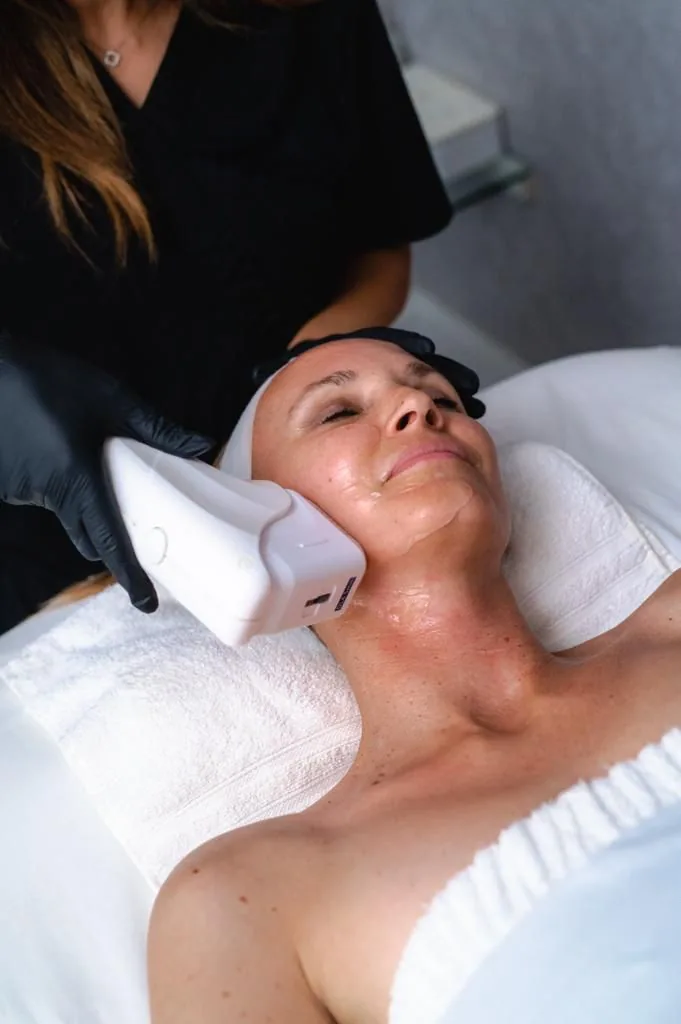
A cryo facial is a facial treatment that uses controlled cold on the surface of the face. At our spa, the cold comes from a smooth handheld applicator chilled to about −6 °C. The applicator moves across the skin in brief, controlled passes. The idea is simple. Cool skin tends to look calmer, tighter and less puffy for a while afterward. That is the whole premise. There are no needles, no injectables and no freezing of the tissue.
We call it a cryotherapy facial on our menu. Online, the same kind of treatment goes by several names: cryo facial, cold facial, ice facial, frotox. The names describe the same basic idea, though the equipment and the method vary a great deal from one place to another. This guide explains what the treatment is, where the frotox nickname comes from, what it is commonly used for, and what it is not.
The nickname is a mash-up. The first part comes from frozen. The ending borrows from the name of a well-known injectable used to soften the look of expression lines. Put together, the word suggests a cold treatment that gives a smoother, fresher look without needles. It is catchy, and that is why it spread across social media and spa menus.
We understand the appeal of the word, but we do not use it, because it implies a comparison we cannot stand behind. An injectable works beneath the skin by relaxing the muscles that create expression lines, and its effect typically lasts a few months. A cryo facial works on the surface. It cools the skin, which may temporarily reduce the look of puffiness and leave the face looking brighter. Those are different mechanisms with different timelines. Calling a facial frotox sets the wrong expectation, so we would rather tell you plainly what the treatment does and let you decide whether it fits what you want.
There are two common ways to deliver cold to the face, and they are not the same experience. It helps to know which one a spa uses before you book.
The first is nitrogen vapor. A technician directs a stream of very cold vapor from a wand toward the face, usually from a short distance, and keeps it moving so it never rests on one spot. Some people enjoy the dramatic feel of it. The downside is that the dose is harder to control, because the distance, the angle and the speed of the wand all change how much cold reaches the skin from one moment to the next.
The second is contact cooling, which is what we use. A smooth applicator is chilled to a set temperature, around −6 °C, and then glided across the skin in short, deliberate passes. That temperature belongs to the applicator, not to your skin. Your skin cools, but it never reaches the applicator's temperature, because each pass is short and the applicator is never held in one place. Contact cooling is quieter, more even, and easier to repeat the same way at every visit. That consistency is the main reason we chose it. For a longer explanation of how cold affects the surface of the skin, see our science page.
Many clients book a cryo facial for the way the face looks right after. Cooling the skin may temporarily reduce the look of puffiness, especially around the eyes and the cheeks. Many clients notice that their skin looks brighter and feels tighter for a few hours to a day or so afterward. Pores may look smaller for a short while as the surface responds to the cold. Results vary, and the effect is temporary by nature.
That makes it a popular choice before an event, a photo session or a long day when someone wants to look rested. It is also a comfortable option for people who find heat-based facials too intense, or who prefer a treatment with little to no downtime. There is typically no peeling, and many clients go straight back to their day.
Some clients use it as part of a routine and book every few weeks. A typical starting point is one session to see how your skin responds, then a decision about frequency based on how long the refreshed look holds for you. For what each visit includes, see our cryotherapy facial page.
It is not an injectable. Nothing goes under the skin, and nothing changes how your muscles move. Expression lines that come from muscle movement will still be there when you smile. A cryo facial may make the skin around those lines look smoother and more rested for a while, but it does not do what an injectable does, and we will not tell you otherwise.
It is not a freezing of the skin. The applicator is cold, but the passes are brief and the applicator stays in motion, so the skin surface cools without freezing. That is the whole design. Freezing the skin would cause harm, and a careful cryo facial is nothing like that. If any cold treatment leaves your skin white, stiff or numb for a long time, that is not how it should feel, and you should say so right away.
It is not a fix for a skin condition. If you are dealing with rosacea, melasma, eczema or active acne, a dermatologist or physician is the right first step, and they can tell you whether cold on the face is a sensible idea for your skin. We offer cosmetic services, not medical care.
Most visits begin with a cleanse and a light preparation of the skin. The cooling step comes next. The applicator touches the skin with firm, cold pressure, something like a chilled stone being moved slowly across the face. Many clients describe it as intense for the first few seconds and then pleasant. Your face may look slightly pink right afterward as warmth returns to the surface. That usually settles within minutes.
The session usually closes with a serum or moisturizer suited to your skin. The whole visit is about 60 minutes. There is nothing to avoid afterward beyond common sense. Skip harsh scrubs for the rest of the day and use sunscreen as you normally would.
A few situations call for a conversation with your physician before you book: pregnancy, a pacemaker, cold urticaria (a hive reaction to cold), an active skin infection, or recent surgery. Please mention any of these when you book so we can advise you honestly rather than guess.
If you want a treatment that leaves the face looking refreshed and less puffy, with no needles and a quick return to your day, a cryo facial is a reasonable thing to try. If you are looking for a lasting change in expression lines, it is not the right tool, and we would say so before you spend the money. Some clients pair it with LED or RF sessions over time, since each works on a different part of the picture.
Our spa is inside Hulen Mall in Fort Worth, with free parking and evening hours most days. Current prices, including the cryotherapy facial, are on our pricing page. If you are unsure whether cold is the right starting point for your skin, call us and describe what you are hoping to change. We will tell you what we think, including when the answer is a different treatment.
Frotox is a nickname people use for cold facials, including cryo facials. It is not a separate treatment and not an injectable. The word suggests a comparison with injectables that does not hold up, so we use the plain name.
No. −6 °C is the temperature of the applicator. Each pass is brief and the tool keeps moving, so the skin cools without reaching that temperature and without freezing.
Results vary. Many clients notice a less puffy, brighter look for several hours to a day or so. The effect is temporary by nature, which is why some clients book every few weeks.
Treatments at Vearitea Wellness Spa are cosmetic and wellness services, not medical care, and are not intended to diagnose, treat, cure or prevent any disease. Results vary from person to person. If you are pregnant, have a pacemaker, cold urticaria, an active skin infection, or have had recent surgery, talk to your physician before booking.
If a refreshed, less puffy look with no needles sounds like what you are after, you are welcome to book a cryotherapy facial and see how your skin responds.
Keep reading
FaceAn ice roller and a cryotherapy facial both use cold. The differences are temperature control, the full protocol and the serum step. Here is when each fits.
Read the guide
FacePuffy from a flight or a late night, or flushed before an event? How a cooling facial may temporarily change the look of your skin, and who should skip it.
Read the guide
FaceA cryotherapy facial at our Hulen Mall spa is $325 for 60 minutes. Here is what that hour includes and how to read cheaper cryo prices around Fort Worth.
Read the guide